Reflections on Christian Missions in Colonial Times
The emergence of the YMCA (Young Men’s Christian Association) occurred during a period of significant social change in Britain, as the Industrial Revolution drew many young people from rural areas into the cities. The movement quickly spread, staffed primarily by people of goodwill. Today, the YMCA—commonly called “the Y”—operates in 120 countries, with headquarters in Geneva, and serves both young men and women (the latter through the YWCA).
The role of Christian missions during Western colonial expansion is now widely criticized, often for reasons that resonate within both Christian and secular communities. At its most cynical interpretation, missionaries were seen as agents of colonial powers, used to subdue other peoples while extracting resources to enrich commercial interests. History certainly offers examples of such abuses—from the atrocities committed by the Spanish in the New World to King Leopold of Belgium’s cruel exploitation under the guise of charity. However, this sweeping negative generalization is far too simplistic and often promoted for ideological reasons.
Today, historians are revisiting this period with a more balanced perspective. Recognition is being given to individuals and movements that sought to humanize colonial forces. Christian missions often addressed social needs that traders and military personnel ignored. Still, all people operate within the cultural frameworks of their time. When not co-opted by state or elite interests, religion can serve as a critical voice for implementing positive values within societies.
One example is the China Inland Mission—the largest Christian missionary group in China—which recruited members directly from churches without support from Western governments. Its teachings emphasized Christ’s call for followers to be “salt and light” within their cultures. While Western cultural dominance often distorted Christian ideals, many missions genuinely worked to improve the well-being of those they served. While hindsight critiques are valuable, one must also ask: What would Western colonialism have looked like without the involvement of Christian missions?
During my time in China—and even earlier—I developed a keen interest in the global impact of mission work. Presbyterians, in particular, are noted for their balanced commitment to Christian teaching and the establishment of quality institutions. Modern approaches to education, including the inclusion of girls in schools, were introduced in China through Christian missions. Medical training and higher education initiatives mirrored those in the West and were largely products of Christian social efforts. This brings us to the role of the YMCA during China’s era of rapid change.
YMCA Beginnings
In 1844, George Williams, a 23-year-old Londoner, founded the first YMCA group. Within a decade, the movement had spread internationally, and by 1855, an international association was formed. Motivated by Christian values, the YMCA promoted a holistic lifestyle for young men—focusing on body, mind, and spirit—a principle symbolized by its iconic triangle logo.
One of its early leaders was Henry Dunant of Switzerland, a Nobel Prize laureate who not only championed the YMCA internationally but also founded the International Red Cross.
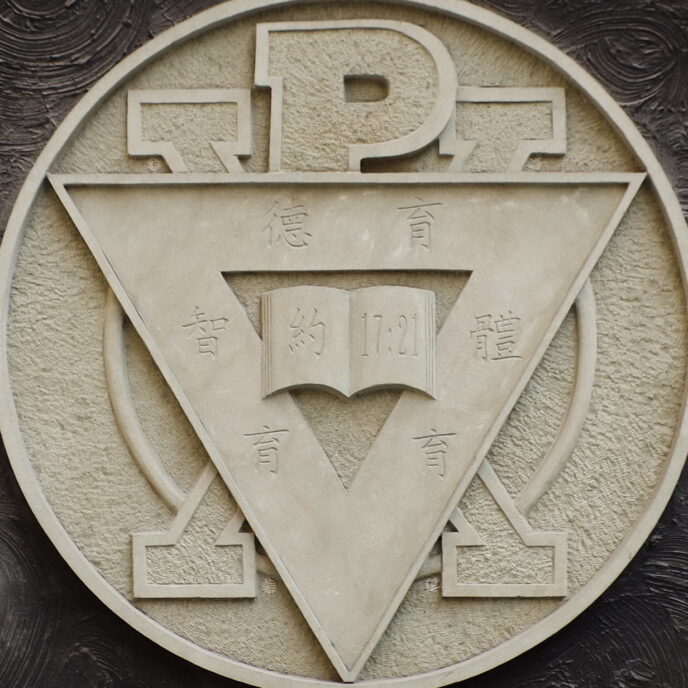
The YMCA in China
In Chengdu, as in other parts of China, both foreign and local leadership helped establish the YMCA. Fletcher Brockman, an American, initially led the movement in China and is still recognized for his early promotion of science education in China. By 1932, leadership transitioned to C. T. Wang (Wang Zhengting) and Yu Rizhang, who expanded the YMCA to 38 city branches and organized 175 student groups in schools and government agencies.
Both men later assumed significant roles in Chinese government and gained international recognition. Wang served as foreign minister, finance minister, justice minister, and acting premier during the Republic of China era. Yu, through YMCA networks, engaged China’s increasingly educated classes with lectures that addressed the nation’s developmental needs.
Meanwhile, John R. Mott emerged as a prominent YMCA leader. Beginning in 1888 with responsibilities in the U.S. and Canada, he later served as International Secretary (1926–1937). Mott also led the World Student Christian Federation (later the Student Christian Movement), recruiting hundreds of college graduates for mission work in China and beyond. His influential book, The Evangelization of the World in This Generation (1904), reflected his vision for global outreach. A key architect of the World Council of Churches (1948), Mott received the Nobel Peace Prize for his international efforts.
Preserving YMCA Heritage in Chengdu
As a tribute to the YMCA’s role in China’s early economic development, Chengdu City is preserving its historic YMCA buildings. The YMCA/YWCA movement helped open China to the world while promoting values shared by Christianity and traditional Chinese culture.
See: Historic YMCA site in Chengdu (Sichuan Province)
 Chinese Leaders Influenced by the YMCA
Further to the accounts of Wang and Yu, many other Chinese leaders are featured in a three-volume publication that sketches their strong early missionary connections. Many participated in the first student exchanges between China and the U.S. Of the 26 individuals profiled, 15 were significantly involved with—and influenced by—the YMCA.
Related:
John R Mott — Famous quotes
History and meaning of the YMCA Triangle
First published: 2022/09/02/
Latest revision: 2026/01/01/